
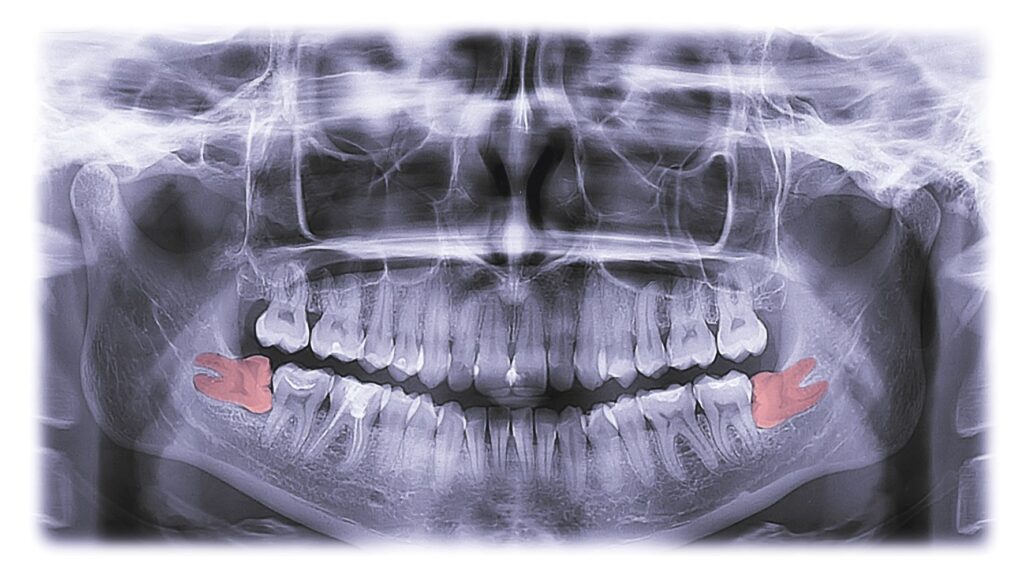
If you’re about 17 years or older and have developed a persistently sore jaw, the discomfort you’ve noticed might be due to your wisdom teeth. These third molars are infamous for causing issues, such as aches, overcrowding, impaction, or infection in their attempt to grow through the gumline.
You’re not alone if you’re wondering why people have them in the first place if they’re so problematic. Continue reading to learn more about wisdom teeth and the possible reasons why our early ancestors evolved them!
What Are Wisdom Teeth?
Wisdom teeth usually arrive years after your other permanent ones have already erupted. Typically, they develop between the ages of about 17 and 25, when people are somewhat older and presumably wiser, which may be how they earned their name.
There are typically 4 of these large molars; one for each quadrant of the mouth. Today, they’re considered a vestigial feature because they don’t serve a functional purpose, and can cause dental problems when they show up. As a result, many providers recommend having them removed before they can become more troublesome. In fact, the extraction procedure is so common among teens that many consider it a rite of passage into adulthood.
Why Do We Have Wisdom Teeth?
The exact reasons why humans evolved wisdom teeth aren’t entirely known, but many experts believe it was for survival. It’s believed that our ancient ancestors lived on a tough diet of leaves, roots, nuts, and raw meat, which required plenty of chewing power to consume. These hard ingredients were probably rough on enamel and might have broken, destabilized, or dislodged the molars before reaching adulthood.
Wisdom teeth may have developed as replacements to allow people to continue biting and chewing successfully later in life. However, today they’re considered a vestigial feature because they no longer serve a functional purpose thanks to cooked food, utensils, and contemporary dental care.
Does Everyone Have Wisdom Teeth?
Although most people eventually develop these third molars, there are certainly exceptions to the rule. For instance, some people only ever grow 1, 2 or 3 of them, and some lucky individuals never have any at all! While scientists aren’t completely sure why, they believe genetics plays a part. If either of your parents is missing any wisdom teeth, you might not grow all 4.
Not only that, but if your third molars grow in at an appropriate angle and don’t cause aches or overcrowding, they might not require extraction!
Your oral surgeion can take X-rays to help determine how many wisdom teeth you have and whether they think removal will be required based on your unique circumstances.
Meet the Author
Dr. Benjamin Keyser is passionate about helping patients build and maintain happy, healthy smiles for life. He earned his Doctor of Dental Medicine degree from the University of Pennsylvania School of Dental Medicine, then completed a six-year residency at the University of Maryland to achieve his specialty education in oral and maxillofacial surgery. Today, he uses state-of-the-art technology to deliver a variety of complex and surgical procedures, including wisdom tooth extractions, all under one roof to meet your needs. You can request an appointment on the website or by calling (781) 628-2268.